

Product families
Quick links
Headquarters
Sign up for our newsletter to receive updates directly in your inbox
By registering I agree to TreCe’sdata protection policy.
We support the important work of



Waste sorting requirements are tightening for businesses, and more offices are taking a serious look at how they handle their waste. Before you pick recycling furniture and bins, though, there’s a simpler question to answer: how many waste fractions does your office actually need to sort, and which system handles that without taking over the room?
This guide walks through what 1 to 8 waste fractions means in practice and matches each level to a concrete TreCe solution, so you can choose the right setup from the start and scale up as needs grow. If you’d rather have the whole process, from waste audit and signage through to follow-up, our complete guide to office waste sorting covers that. Here we’re focused on choosing a system.
A waste fraction is a separate type of waste that’s collected and handled on its own. The more fractions you sort, the more material gets recycled or reused rather than incinerated. The number you choose also determines how large and how modular your recycling setup needs to be, and which solution fits.
UK legislation requires organisations to separate waste for material recycling, with requirements tightening in recent years. Exactly which fractions apply can vary by local authority, business size and your waste collection contract, so it’s worth checking with your council before you finalise anything.
In practice, more fractions means more space and a more modular setup. That’s why the number of fractions is the first thing to pin down: it determines whether a small standalone bin is enough, or whether you need a central, expandable recycling station.
With just one or two fractions you’re separating general waste from one other type. It’s a simple start, but it rarely meets the requirements that apply to most businesses today.
Good for: home offices, very small operations, or temporary workplaces without a kitchen.
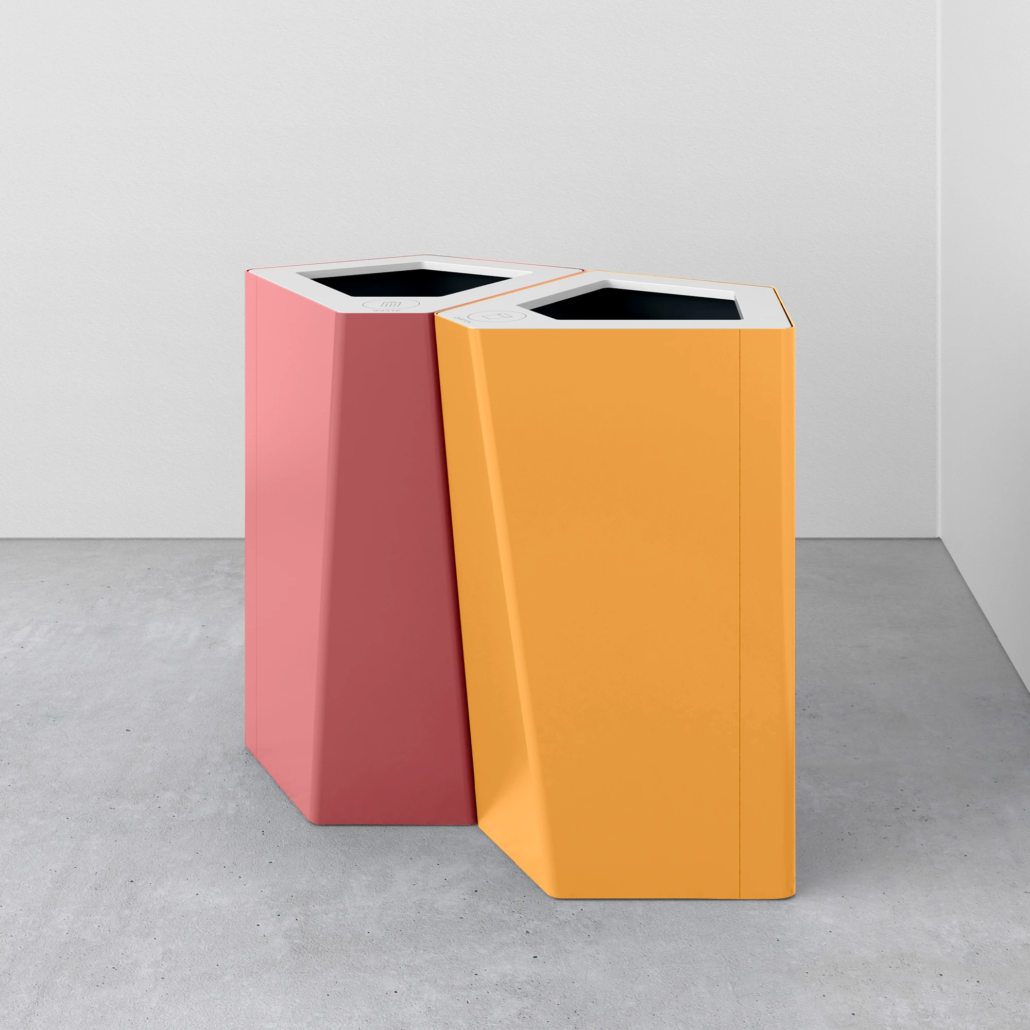
Solution: a well-designed bin is usually enough here. Kite and Hold work well at a desk, while Kite mini is made for tight spaces. For more visible spots like reception areas and corridors, Popsicle and Hightower are both winners of the German Design Award 2023.
Limitation: won’t meet legal requirements for businesses with anything more than occasional waste.

With 3 to 4 fractions you’re covering the most common waste types in a structured way: general waste, food waste, paper packaging/paper for recycling, and plastic packaging. Glass and metal can be taken to a public recycling point rather than collected on-site.
Good for: small offices with 1 to 10 employees, limited kitchen space, businesses just getting started with waste sorting.
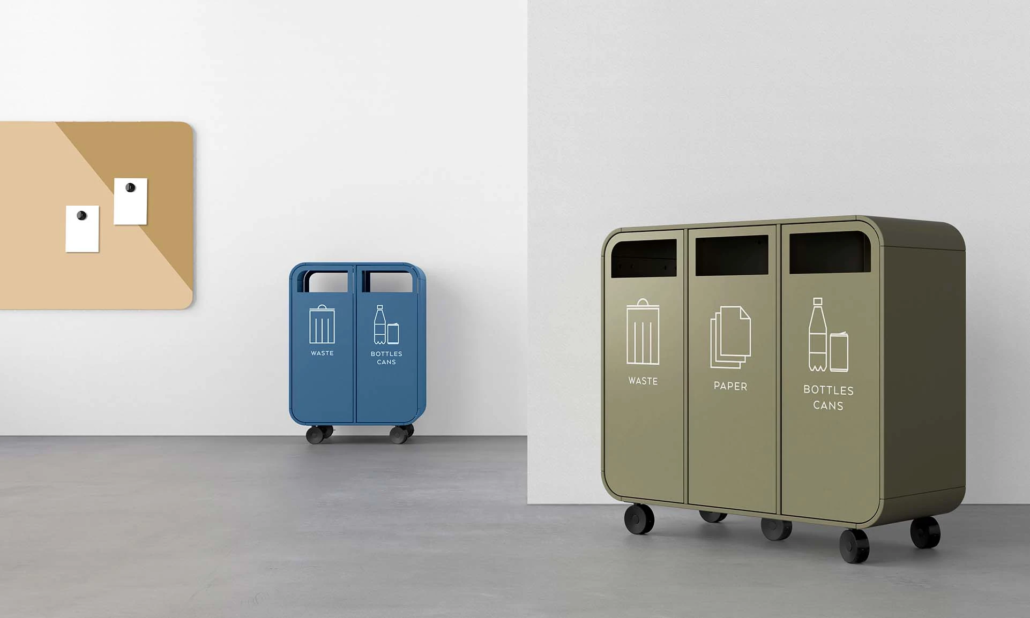
Solution: a standalone recycling unit that covers a few fractions in a small footprint. Wavy, KLOSS (also available as KLOSS small and KLOSS mini) and Etage (winner of the German Design Award 2024) are all designed to sort waste neatly without needing a full wall of space.
Note: always check your local council’s requirements. Some authorities have specific collection rules that determine which fractions need to be sorted separately.

For most offices, 5 to 6 fractions hits a good balance between practicality and sustainability: general waste, food waste, paper packaging, plastic packaging, paper for recycling/newspapers, and metal packaging (or glass). This is the level most office recycling cabinets and stations are sized for.
Good for: mid-sized offices with 10 to 50 employees, workplaces with a lunch room or café.
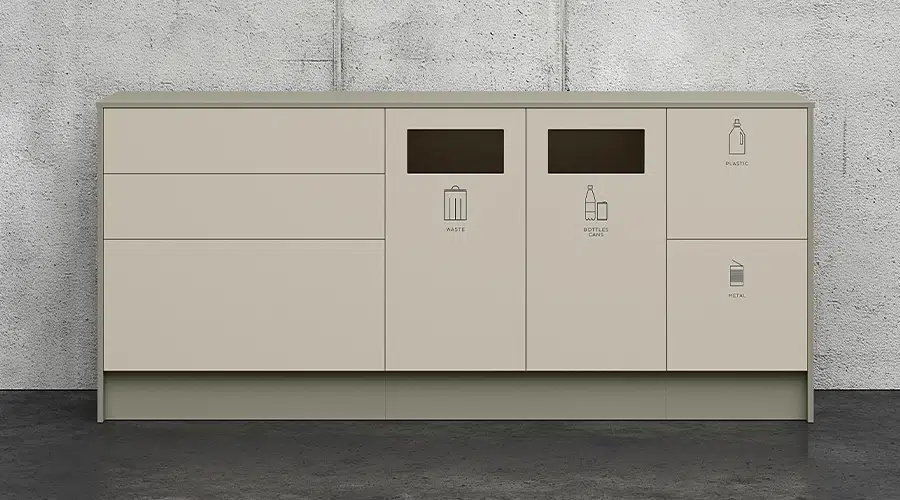
Solution: a modular Recycling station that brings several fractions together at one central point is the core of the setup. Add KLOSS or Cloud (nominated for the German Design Award) where sorting should blend with the interior, plus smaller bins near workstations. This gives you enough sorting coverage to meet legal requirements while keeping waste costs down.
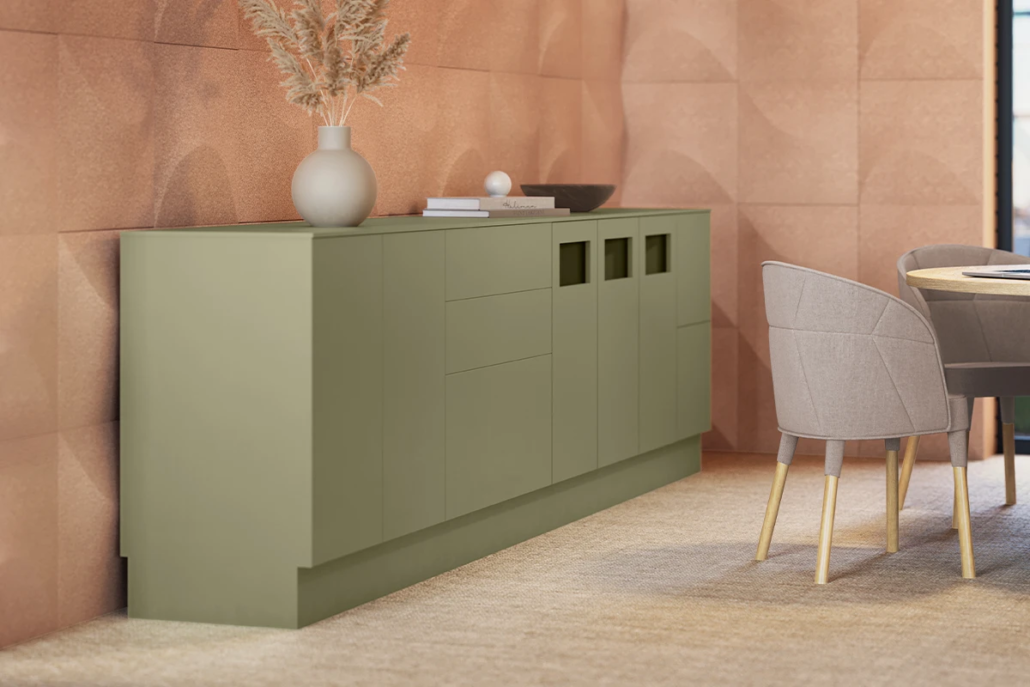
With 7 to 8 fractions you’re handling almost the entire waste flow on-site: general waste, food waste, paper packaging, plastic packaging, metal packaging, clear and coloured glass, and paper for recycling/office paper. Hazardous waste like batteries and electronics is often added on top, but always kept separate with its own collection solution.
Good for: large offices and organisations with high sustainability reporting requirements, the public sector, and businesses with ESG documentation.
Solution: expand the Miljöstation to cover the full number of fractions as your central sorting point, and add bins like Kite, Hold, Popsicle and Hightower near workstations. In the kitchen, a Miljödisk in Combiline or Space configuration lets people rinse and sort right at the sink. A complete setup needs more floor space, but delivers maximum recycling rates without staff having to take waste to external collection points.

Three things drive the decision: your local authority’s requirements, the size and waste volume of your business, and your sustainability ambitions or ESG commitments.
A good rule of thumb: choose a system that handles what you’re required to sort today, but can expand when requirements tighten or the business grows. A modular solution like Miljöstation gives you that flexibility. You start with the fractions you need and add more without replacing the whole system.
The table below is a starting point. Work from your legal requirements and a waste audit, and choose a level you can maintain consistently over time.
| Waste fractions | Good for | TreCe solution |
|---|---|---|
| 1 to 2 | Home office, temporary workplace | Bins: Kite, Kite mini, Hold, Popsicle, Hightower |
| 3 to 4 | Small office, 1 to 10 employees | Standalone unit: Wavy, KLOSS, Etage |
| 5 to 6 | Mid-sized office, 10 to 50 employees, lunch room | Modular Recycling stations + KLOSS/Cloud + bins |
| 7 to 8 | Large offices, public sector, ESG requirements | Expanded Recycling station + bins + recycling unit in kitchen |
Whatever the number of fractions, the system needs to be easy to use, easy to empty, correctly sized for each fraction, and clearly labelled. Aesthetic fit matters just as much. A recycling solution shouldn’t bring the office environment down. Good design actually increases recycling rates: when the unit looks like it belongs, people use it more.
That’s the thinking behind several of TreCe’s most popular products. Etage and KLOSS (both German Design Award winners in 2024), the nominated Cloud and the distinctive Wavy show that sorting can be functional and good-looking, and genuinely become part of the interior. A detailed walkthrough of placement, signage and follow-up is in our complete guide to office waste sorting.
TreCe has been developing waste sorting and storage solutions for offices and public spaces for decades, with design and sustainability at the core. For central, expandable sorting points there’s Miljöstation. For sorting that blends with the interior, Wavy, KLOSS, Etage and Cloud. For bins at desks, meeting rooms and reception areas, Kite, Hold, Popsicle and Hightower. In the kitchen, Miljödisk rounds out the setup.
Explore our office recycling solutions, browse the full range, or get inspired by how sorting can become part of your interior.


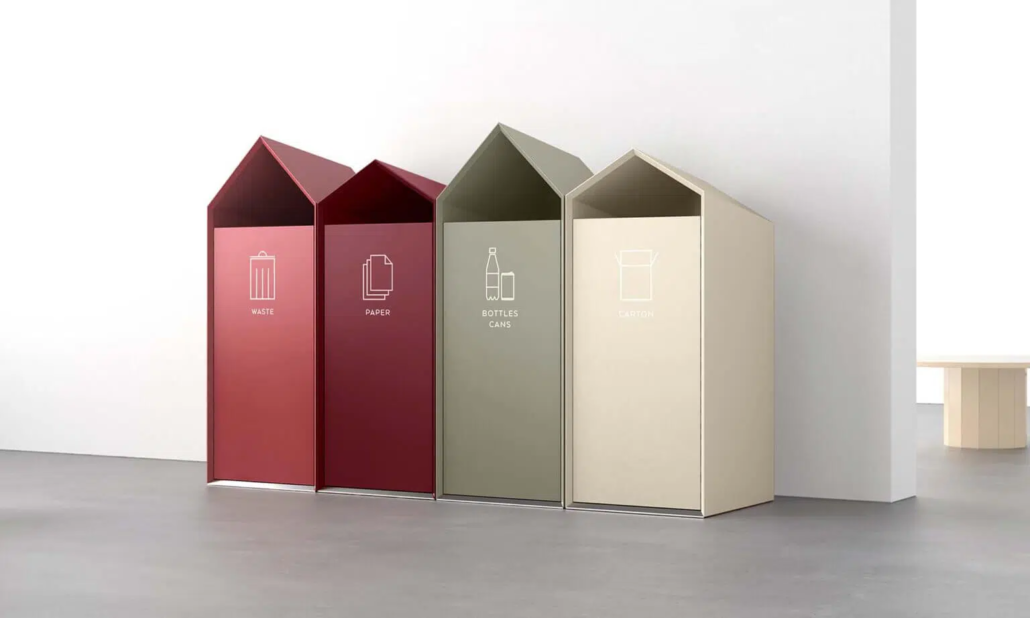

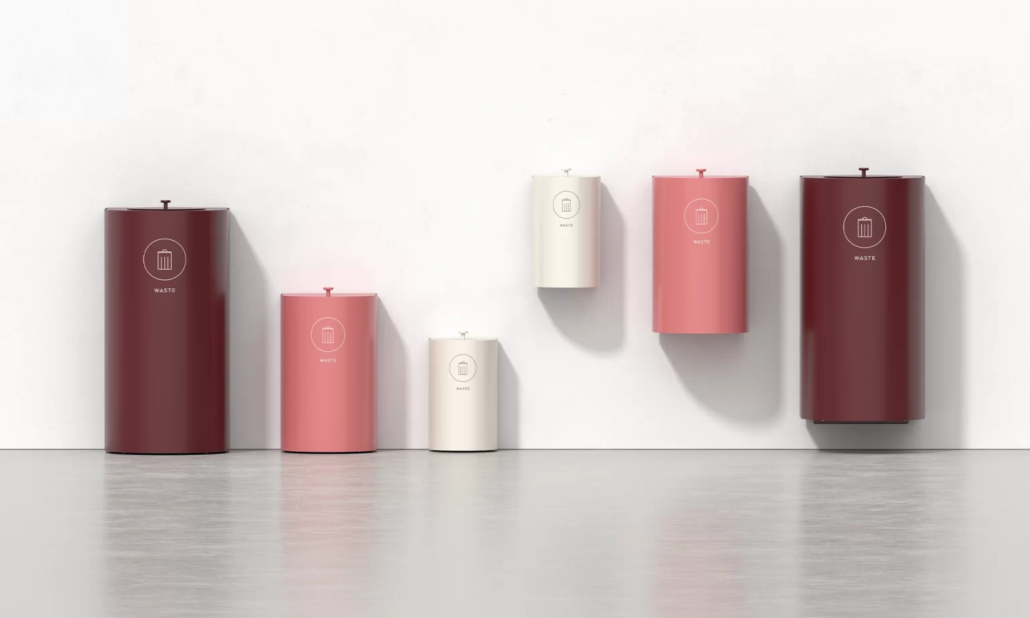
There’s no universally right number of waste fractions. It comes down to the size of your business, your local authority’s requirements and your own ambitions. Most offices land somewhere between four and eight fractions. Pick the level you can maintain consistently, and go modular so the system can grow with you.
Want help choosing the right setup? Explore TreCe’s office recycling solutions at trece.se. And if you want the full process from audit to follow-up, read our complete guide to office waste sorting.
Most offices land somewhere between four and eight. Start from your legal requirements and a waste audit, and choose a level you can maintain consistently. A modular recycling station makes it straightforward to start small and expand.
For a small office handling 3 to 4 waste fractions, a standalone unit like Wavy, KLOSS or Etage is usually enough. They sort several fractions in a small footprint and come in sizes that work even in tight spaces.
Yes. With a modular solution like Miljöstation, you can start with the fractions you need today and add more as requirements tighten or the business grows, without replacing the whole setup.
No. With the right design, recycling units become part of the interior and actually encourage better sorting habits. TreCe’s award-winning Etage, KLOSS and Cloud show that sorting can be both functional and worth looking at.
Connect with us
Vibrant Choices, No Extra Cost
Dive into our diverse palette of standard colors and customize your space without the custom price.
Product families
Quick links
Headquarters
Sign up for our newsletter to receive updates directly in your inbox
By registering I agree to TreCe’sdata protection policy.
We support the important work of

 First come, first served: 50% off and free shipping